Postdoctoral Researcher · PNNL
Siddhartha
Shankar Das.
Learning from structure.
Building AI that scales.
I develop graph learning algorithms and AI systems that turn complex, connected data into useful scientific and engineering decisions.

National LaboratoryData Science & Machine Intelligence
I work at the intersection of graph algorithms, evolutionary optimization, machine learning, and scalable AI systems — from the foundations of graph sparsification to applications in science, security, and system design.
More about me ↗Research milestones
News & updates
Publications, preprints, public releases,
and career milestones.
EDiS is available on arXiv: edge-disjoint subgraph decomposition for sparse GNN training. ↗
Scaffold is available on arXiv, with a public implementation of support-graph sparsification. ↗
Two works on joint hardware/software partitioning and scheduling accepted at HPEC 2026. ↗
New preprint: Unifying Graph Neural Networks Through a Common Layer Equation. ↗
Best Paper Award at IEEE HST for vulnerability-to-attack-pattern mapping. ↗
Complete research output
Publications
All 18 papers, preprints, reports, chapters, and theses. Publication status and resources are listed with each entry.
2026
- EDiS: Edge Disjoint Subgraph Sparsification Framework for Graph Neural Networks
- Scaffold: Support Graph Theory Based Sparsification for Graph Neural Networks
- Diff-GNN: Differentiable Graph Neural Networks for Joint Hardware–Software Partitioning and Scheduling
- Joint Optimization of HW/SW Partitioning and Scheduling with Deep Reinforcement Learning
- Unifying Graph Neural Networks Through a Common Layer Equation
- SGS-GNN: A Supervised Graph Sparsifier for Graph Neural Networks
2025
- ATT&CK to CVE: A Large-Scale Automated Knowledge Graph for Threat Intelligence
- NEPATEC v2.0: Standardized Metadata and Text Corpus of National Environmental Policy Act Documents
- Generative AI for Advanced Cyber Defense
- Scaling Graph Neural Networks for Large Graphs and Analyzing Common Vulnerabilities via Large Language Models
2024
2022
2021
2019
2018
2017
Research directions
Structure. Scale. Impact.
Graph learning at scale
How much of a graph do we need to learn well? I design sampling and sparsification algorithms that retain useful structural and attribute information while reducing computational and memory costs.
02Learning for system design
I use graph representations and learning-based optimization to connect computation structure with hardware and software design decisions.
03AI for cybersecurity
I develop language-model and knowledge-graph methods that connect vulnerabilities, weaknesses, attack patterns, and adversary behavior.
04Multimodal & agentic AI
I build AI systems that extract, organize, and retrieve information from large collections of scientific and regulatory documents.
05Multi-objective & many-objective optimization
I design evolutionary algorithms for problems with multiple competing objectives, with a particular focus on many-objective optimization and the balance between convergence toward the Pareto front and diversity among solutions.
Papers & preprints
Paper figures & research highlights
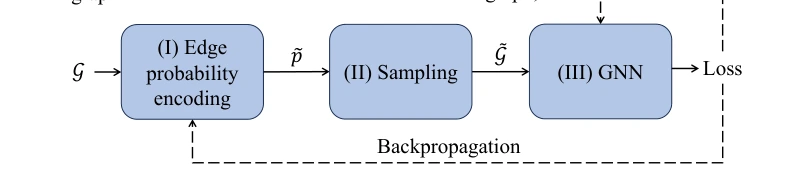
SGS-GNN: A Supervised Graph Sparsifier for Graph Neural Networks
Learn which graph edges matter for a downstream prediction task. SGS-GNN trains an edge probability model and a GNN together to sample compact, task-relevant subgraphs, reducing memory requirements while preserving predictive signal.

Scaffold: Support Graph Theory Based Sparsification for Graph Neural Networks
An unsupervised sparsification framework that controls the length of rerouted communication paths and the load they place on retained edges. Across 19 benchmarks, sparse supports retain 10–50% of edges while recovering or closely approaching full-graph GNN performance.
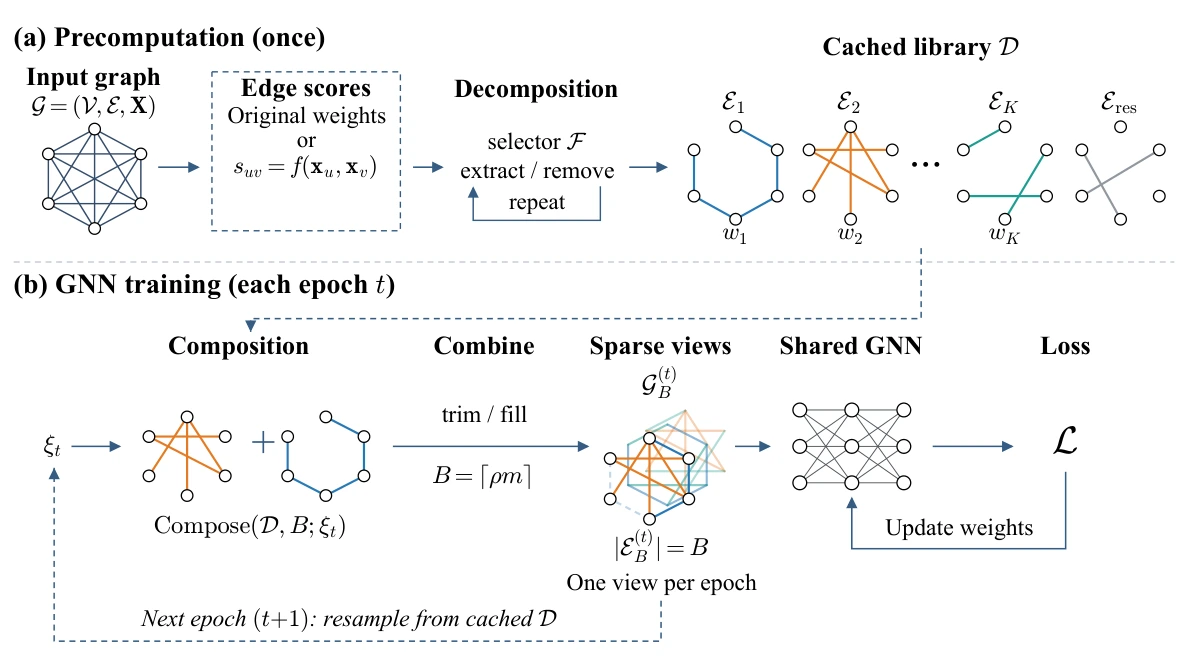
EDiS: Edge Disjoint Subgraph Sparsification Framework for Graph Neural Networks
Decompose a graph once, then reuse cached edge-disjoint subgraphs to compose a different sparse training graph each epoch. EDiS separates structural extraction from epoch-level sampling and evaluates this approach across 19 node classification benchmarks.
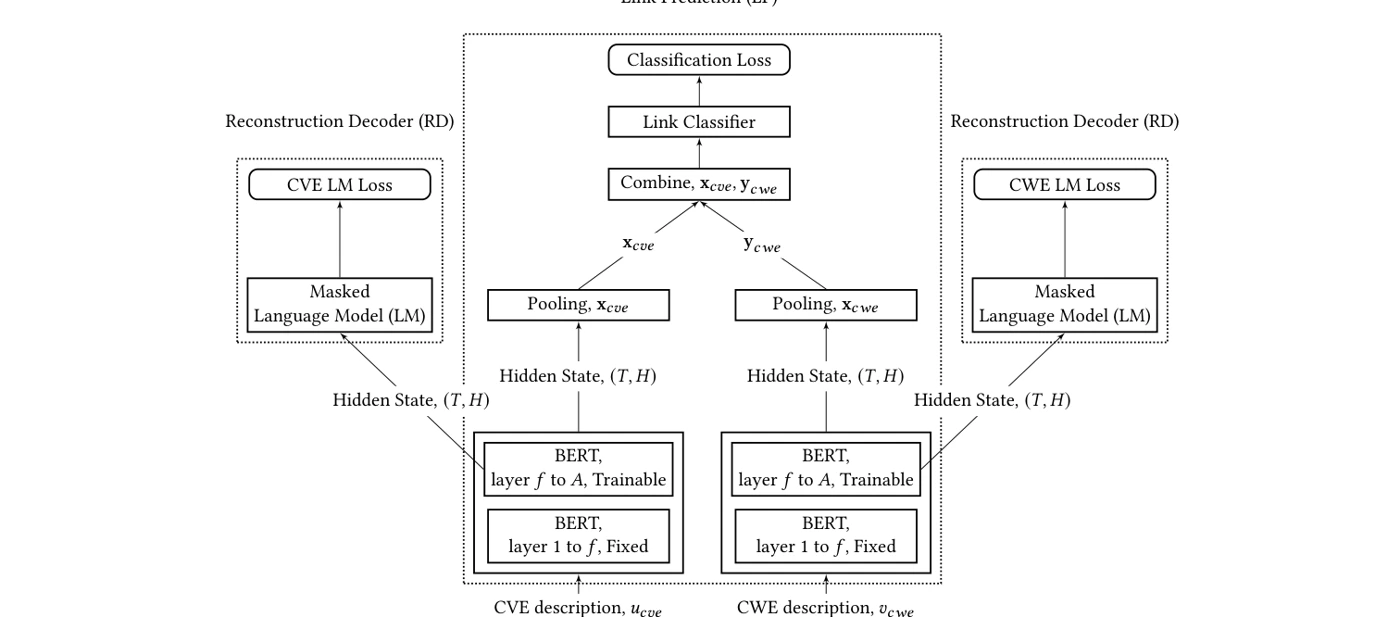
V2W-BERT: A Framework for Effective Hierarchical Multiclass Classification of Software Vulnerabilities
A BERT-based framework maps vulnerability descriptions to a hierarchy of software weaknesses. Link prediction and a reconstruction objective support classification even when labeled examples for particular weaknesses are scarce.
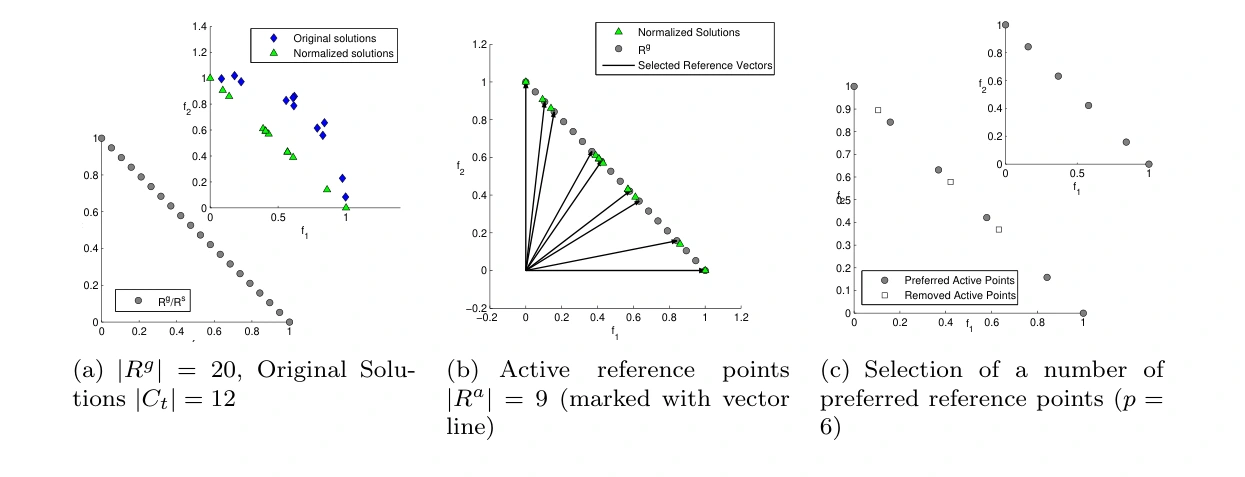
Evolutionary algorithm using adaptive fuzzy dominance and reference point for many-objective optimization
An evolutionary optimization method combines adaptive fuzzy dominance and reference points to balance convergence and diversity when optimizing many competing objectives.
Let’s connect
Good research starts
with a conversation.
I welcome conversations about graph learning, AI systems,
and interdisciplinary research.